Treeova's Logic Tree automation lets traders build sophisticated options strategies using visual decision trees with up to 8 conditional layers, Greeks-aware triggers, and automated multi-broker execution — no coding required.
Trading Automation with Logic Trees
Build options strategies with visual decision trees. Up to 8 conditional layers, Greeks-aware triggers, TradingView webhook integration, and multi-broker execution.
No coding required — use the guided visual workflow.
Supports stop loss, trailing stops, break-even triggers, and position sizing.
Integrates with ConnectTrade, Lightspeed, and TradeStation.
Logic Tree Automation
Flowcharts Automate. Logic Trees Think.
Build sophisticated options strategies with visual decision trees. Up to 8 conditional layers, Greeks-aware triggers, and automated execution—no coding required.
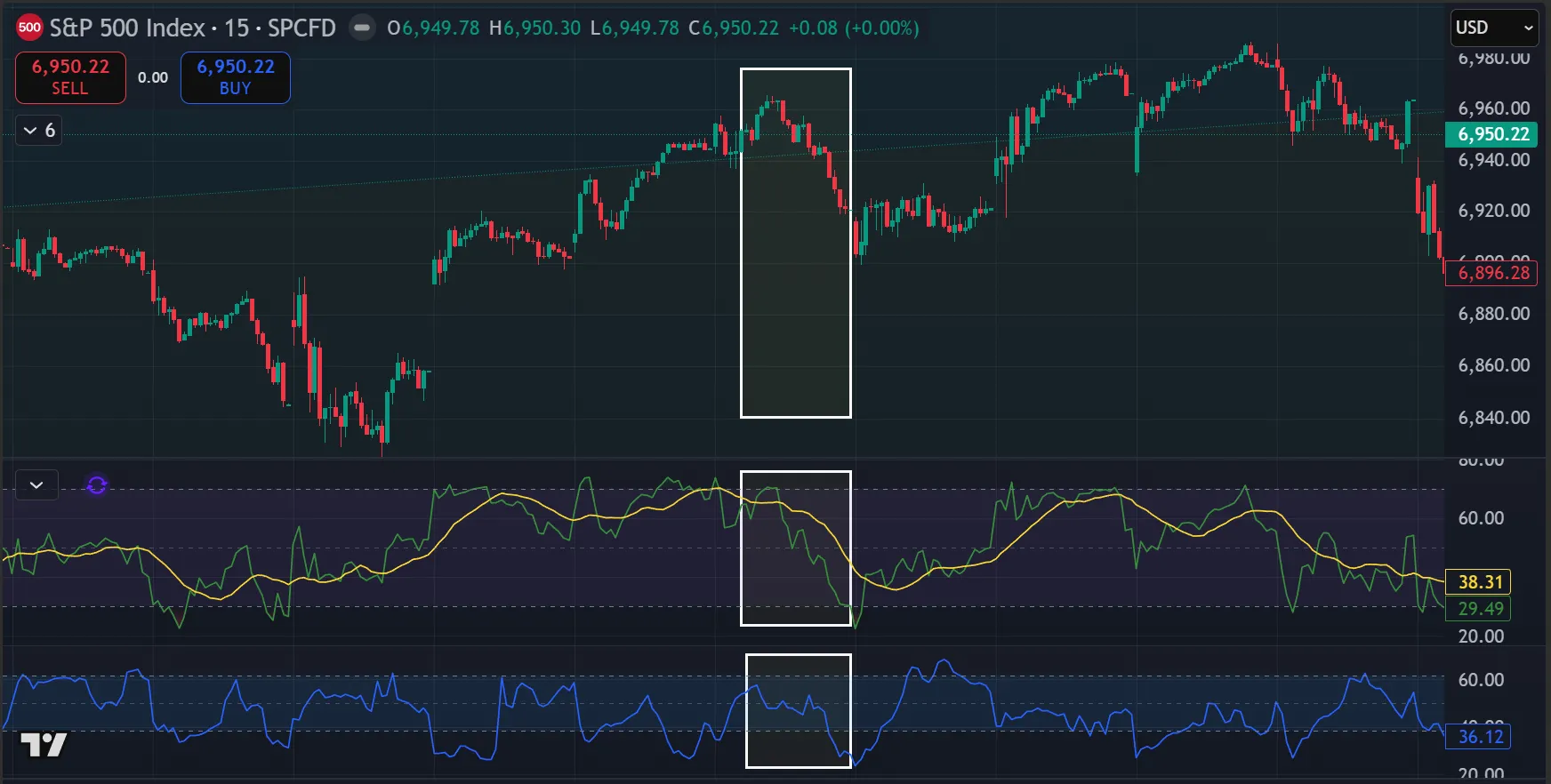
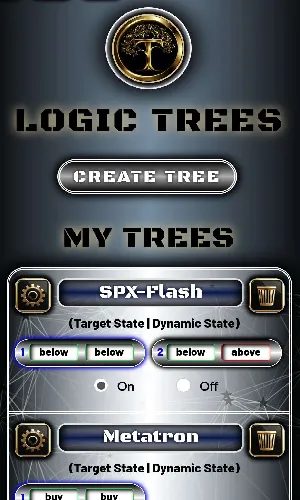
Connect your TradingView alerts to automated Logic Tree execution
SPX 15-min with RSI & CHOP
TradingView Alert Fires
Webhook Triggers Logic Tree
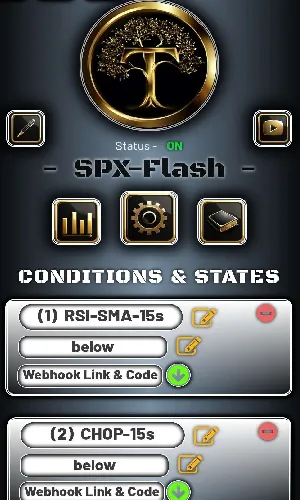
Trade Executes Automatically
Logic Tree Manager
Conditions & States
The Core Technology
What Are Logic Trees?
Logic Trees are visual decision frameworks that automate your trading strategy. Unlike simple "if-then" rules, Logic Trees can evaluate up to 8 nested conditions simultaneously—mimicking how experienced traders actually think.
Each branch represents a decision point: market conditions, technical indicators, Greeks values, time of day, or risk parameters. When all conditions align, your trade executes automatically.
1
RSI crosses above 70 AND Delta > 0.3
2
IV Rank > 50% AND within trading hours
3
Position size ≤ 2% of account AND stop loss set
Entry Signal Received
RSI > 30?
YES
Delta > 0.3?
NO
Skip Trade
YES
Execute Trade
Everything You Need to Automate Smarter
Logic Trees combine visual simplicity with institutional-grade power
Visual Decision Trees
Build sophisticated strategies with up to 8 binary conditions per tree. No coding required — use the guided visual workflow to configure your logic.
Greeks-Aware Triggers
Set conditions based on Delta, Theta, IV, and other Greeks. Your automation understands options like you do.
Advanced Risk Management
Stop loss %, trailing stops, break-even triggers, and position sizing by account % or contract count.
Time-Based Controls
Day blacklists, minute-level scheduling, and time priority logic. Trade only when conditions are optimal.
TradingView Integration
Connect your TradingView alerts via webhooks. Your indicators trigger real trades automatically.
Multi-Broker Execution
Execute through ConnectTrade, Lightspeed, or TradeStation. One strategy, multiple brokers.
From Idea to Execution
Four steps to automated trading excellence
01
Design Your Logic Tree
Use our visual builder to create conditional decision trees. Set entry conditions like RSI thresholds, MACD crossovers, or custom Greeks targets.
Up to 8 nested conditions
Pre-built templates available
Real-time validation
02
Configure Risk Parameters
Define your risk tolerance with stop losses, position sizing rules, and profit targets. Every trade follows your rules automatically.
Stop loss & trailing stops
Position sizing by % or contracts
Break-even automation
03
Paper Trade & Validate
Test your strategy with real market data from Polygon. See exactly how it would perform before risking real capital.
Real-time market simulation
Slippage modeling
Performance analytics
04
Deploy & Monitor
Go live with one click. Your Logic Tree executes 24/7, following your rules with precision no human can match.
Multi-broker execution
Real-time notifications
Performance dashboard
Why Choose Treeova?
See how Logic Trees compare to other automation solutions
Feature
Treeova
Others
No-Code Strategy Builder
Limited
Options-Native Design
✕
Greeks-Aware Triggers
✕
8-Layer Conditional Logic
3-4 max
Paper Trading Suite
Trade Sharing Logic Tree Signals
✕
TradingView Integration
Why Eight Conditional Layers, Not Three
Most no-code automation tools cap strategies at two or three branches: an entry trigger, an exit trigger, and maybe a stop-loss. That depth is fine for stock alerts and useless for options. A real options strategy has to classify the regime before it even considers an entry, filter for liquidity to avoid getting trapped in a wide spread, evaluate a Greeks-based trigger that price-only logic cannot express, choose an execution branch that handles single-leg vs. spread differently, decide when to roll, when to stop, when to take profit, and when to abandon the position entirely on an emergency exit. That is eight decisions, and they all have to fire on the same chain tick.
Treeova's logic tree gives you exactly that: up to eight nested conditional layers, evaluated top-down on every options chain update. A typical iron condor strategy might gate entries on a non-trending IV rank above 35, filter strikes for open-interest density above a configurable threshold, fire only when both wing Deltas land between 0.15 and 0.20, route the four-leg ticket through the broker-normalization layer, schedule a Delta-rebalance roll if either short strike crosses 0.30, hard-stop at 2× credit received, take profit at 50% of max profit, and unwind to a single defensive long if the underlying gaps through a wing — all from one tree, no code, one source of truth that backtests, paper-trades, and goes live unchanged.
Depth is the feature. Shallow trees force you to bolt logic onto your broker, your spreadsheet, and your memory; deep trees keep the entire strategy in one auditable graph the AI agents and the RL calibration loop can both read.
Adjustments Inherit the Parent's Risk Envelope
When an adjustment branch fires — rolling a tested short put, inverting a credit spread, recentering an iron condor, or closing a butterfly's losing leg — it does not get a fresh risk budget. Adjustments inherit the parent strategy's stop-loss, profit-target, max-loss-per-trade ceiling, and 20% position-concentration cap. A roll that would breach the original loss limit is rejected and logged to the agent's audit trail rather than retried blindly. This is the difference between automation that compounds discipline and automation that quietly turns a controlled loss into a margin call.
Every order — entry, adjustment, or exit — also passes a symbol-pinning gate before the broker accepts it. The tree declares the underlying it is allowed to trade; the executor extracts the underlying from the actual order ticket and refuses any fill that does not match. That gate is the reason an SPY iron condor strategy cannot accidentally fire on SPX during a chain-resolution edge case, and it is the same gate that backs the U.S.-hours window (9:30 AM–4:00 PM ET) and the $50 minimum buying-power floor for live options. The pre-trade gate failures are visible in the agent's run log within seconds, not buried in a broker statement at end of day.
Together the eight-layer depth, the inherited risk envelope, and the symbol-pinning gate make a logic tree the smallest unit of automation we trust to run unattended on a real broker.
Trading Automation FAQ
How does scheduled automation work on Treeova?
You can set agent chains to run on schedules — daily market scans, weekly portfolio reviews, or custom intervals. Scheduled triggers execute your strategy logic automatically, checking conditions and sending alerts or placing orders when criteria are met.
What safety guardrails exist for automated trading?
Treeova includes multiple safety layers: position size limits, daily loss caps, PDT tracking for cash accounts, confirmation prompts for live orders, and circuit breakers that pause automation if unusual market conditions are detected. All automated orders can be reviewed before execution.
Can I pause or cancel an automated strategy?
Yes, you have full control at all times. Pause any running agent chain with one click, modify its parameters, or cancel it entirely. Paused chains retain their configuration so you can resume when ready. No orders are sent while a chain is paused.
What triggers can I use for automation?
Treeova supports three trigger types: scheduled (run at specific times or intervals), webhook (triggered by external signals from platforms like TradingView), and manual (on-demand execution). You can combine triggers with conditional logic using the 8-layer Logic Tree system.
Can I automate strategies without a live broker?
Yes. You can build, test, and run automated strategies entirely in paper trading mode using your fully funded, risk-free portfolio. This lets you validate your agent chains with real-time market data before connecting a live broker.
Ready to Build Your First Logic Tree?
Start with a free 14-day trial. No credit card required.
Logic Tree AutomationFlowcharts Automate.Logic Trees Think.Build sophisticated options strategies with visual decision trees. Up to 8 conditional layers, Greeks-aware triggers, and automated execution—no coding required.Start Building FreeWatch DemoNo credit card required14-day free trialCancel anytimeSee It In ActionTradingView Meets Logic TreesConnect your TradingView alerts to automated Logic Tree executionSPX 15-min with RSI & CHOPTradingView Alert FiresWebhook Triggers Logic TreeTrade Executes AutomaticallyLogic Tree ManagerConditions & StatesThe Core TechnologyWhat Are Logic Trees?Logic Trees are visual decision frameworks that automate your trading strategy. Unlike simple "if-then" rules, Logic Trees can evaluate up to 8 nested conditions simultaneously—mimicking how experienced traders actually think.Each branch represents a decision point: market conditions, technical indicators, Greeks values, time of day, or risk parameters. When all conditions align, your trade executes automatically.1RSI crosses above 70 AND Delta > 0.32IV Rank > 50% AND within trading hours3Position size ≤ 2% of account AND stop loss setEntry Signal ReceivedRSI > 30?YESDelta > 0.3?NOSkip TradeYESExecute TradeEverything You Need to Automate SmarterLogic Trees combine visual simplicity with institutional-grade powerVisual Decision TreesBuild sophisticated strategies with up to 8 binary conditions per tree. No coding required — use the guided visual workflow to configure your logic.Greeks-Aware TriggersSet conditions based on Delta, Theta, IV, and other Greeks. Your automation understands options like you do.Advanced Risk ManagementStop loss %, trailing stops, break-even triggers, and position sizing by account % or contract count.Time-Based ControlsDay blacklists, minute-level scheduling, and time priority logic. Trade only when conditions are optimal.TradingView IntegrationConnect your TradingView alerts via webhooks. Your indicators trigger real trades automatically.Multi-Broker ExecutionExecute through ConnectTrade, Lightspeed, or TradeStation. One strategy, multiple brokers.From Idea to ExecutionFour steps to automated trading excellence01Design Your Logic TreeUse our visual builder to create conditional decision trees. Set entry conditions like RSI thresholds, MACD crossovers, or custom Greeks targets.Up to 8 nested conditionsPre-built templates availableReal-time validation02Configure Risk ParametersDefine your risk tolerance with stop losses, position sizing rules, and profit targets. Every trade follows your rules automatically.Stop loss & trailing stopsPosition sizing by % or contractsBreak-even automation03Paper Trade & ValidateTest your strategy with real market data from Polygon. See exactly how it would perform before risking real capital.Real-time market simulationSlippage modelingPerformance analytics04Deploy & MonitorGo live with one click. Your Logic Tree executes 24/7, following your rules with precision no human can match.Multi-broker executionReal-time notificationsPerformance dashboardWhy Choose Treeova?See how Logic Trees compare to other automation solutionsFeatureTreeovaOthersNo-Code Strategy BuilderLimitedOptions-Native Design✕Greeks-Aware Triggers✕8-Layer Conditional Logic3-4 maxPaper Trading SuiteTrade Sharing Logic Tree Signals✕TradingView IntegrationWhy Eight Conditional Layers, Not ThreeMost no-code automation tools cap strategies at two or three branches: an entry trigger, an exit trigger, and maybe a stop-loss. That depth is fine for stock alerts and useless for options. A real options strategy has to classify the regime before it even considers an entry, filter for liquidity to avoid getting trapped in a wide spread, evaluate a Greeks-based trigger that price-only logic cannot express, choose an execution branch that handles single-leg vs. spread differently, decide when to roll, when to stop, when to take profit, and when to abandon the position entirely on an emergency exit. That is eight decisions, and they all have to fire on the same chain tick.Treeova's logic tree gives you exactly that: up to eight nested conditional layers, evaluated top-down on every options chain update. A typical iron condor strategy might gate entries on a non-trending IV rank above 35, filter strikes for open-interest density above a configurable threshold, fire only when both wing Deltas land between 0.15 and 0.20, route the four-leg ticket through the broker-normalization layer, schedule a Delta-rebalance roll if either short strike crosses 0.30, hard-stop at 2× credit received, take profit at 50% of max profit, and unwind to a single defensive long if the underlying gaps through a wing — all from one tree, no code, one source of truth that backtests, paper-trades, and goes live unchanged.Depth is the feature. Shallow trees force you to bolt logic onto your broker, your spreadsheet, and your memory; deep trees keep the entire strategy in one auditable graph the AI agents and the RL calibration loop can both read.Adjustments Inherit the Parent's Risk EnvelopeWhen an adjustment branch fires — rolling a tested short put, inverting a credit spread, recentering an iron condor, or closing a butterfly's losing leg — it does not get a fresh risk budget. Adjustments inherit the parent strategy's stop-loss, profit-target, max-loss-per-trade ceiling, and 20% position-concentration cap. A roll that would breach the original loss limit is rejected and logged to the agent's audit trail rather than retried blindly. This is the difference between automation that compounds discipline and automation that quietly turns a controlled loss into a margin call.Every order — entry, adjustment, or exit — also passes a symbol-pinning gate before the broker accepts it. The tree declares the underlying it is allowed to trade; the executor extracts the underlying from the actual order ticket and refuses any fill that does not match. That gate is the reason an SPY iron condor strategy cannot accidentally fire on SPX during a chain-resolution edge case, and it is the same gate that backs the U.S.-hours window (9:30 AM–4:00 PM ET) and the $50 minimum buying-power floor for live options. The pre-trade gate failures are visible in the agent's run log within seconds, not buried in a broker statement at end of day.Together the eight-layer depth, the inherited risk envelope, and the symbol-pinning gate make a logic tree the smallest unit of automation we trust to run unattended on a real broker.Trading Automation FAQHow does scheduled automation work on Treeova?You can set agent chains to run on schedules — daily market scans, weekly portfolio reviews, or custom intervals. Scheduled triggers execute your strategy logic automatically, checking conditions and sending alerts or placing orders when criteria are met.What safety guardrails exist for automated trading?Treeova includes multiple safety layers: position size limits, daily loss caps, PDT tracking for cash accounts, confirmation prompts for live orders, and circuit breakers that pause automation if unusual market conditions are detected. All automated orders can be reviewed before execution.Can I pause or cancel an automated strategy?Yes, you have full control at all times. Pause any running agent chain with one click, modify its parameters, or cancel it entirely. Paused chains retain their configuration so you can resume when ready. No orders are sent while a chain is paused.What triggers can I use for automation?Treeova supports three trigger types: scheduled (run at specific times or intervals), webhook (triggered by external signals from platforms like TradingView), and manual (on-demand execution). You can combine triggers with conditional logic using the 8-layer Logic Tree system.Can I automate strategies without a live broker?Yes. You can build, test, and run automated strategies entirely in paper trading mode using your fully funded, risk-free portfolio. This lets you validate your agent chains with real-time market data before connecting a live broker.Ready to Build Your First Logic Tree?Start with a free 14-day trial. No credit card required.Start Free Live Paper Trading